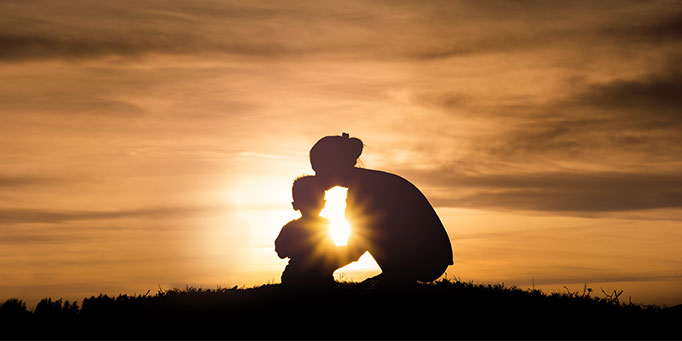
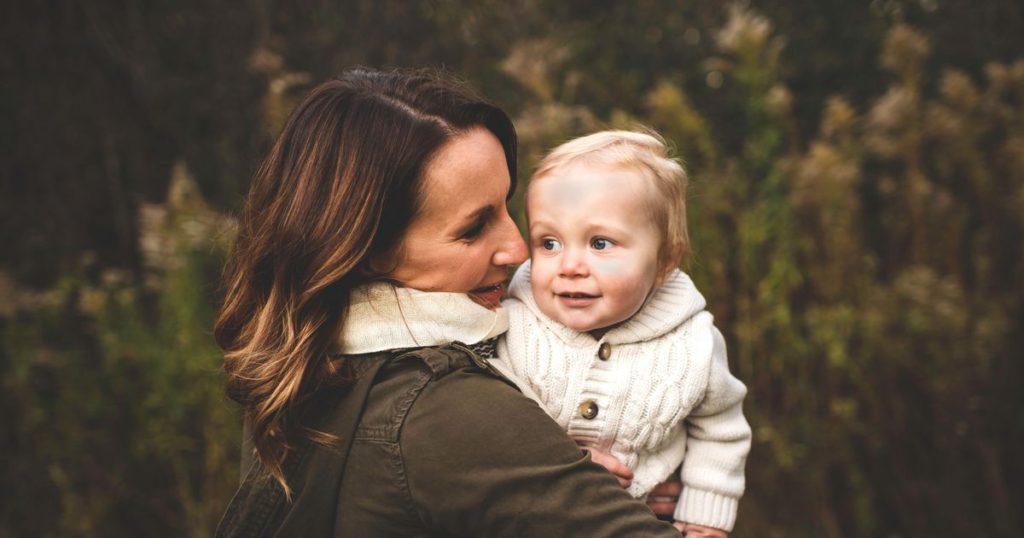
‘Have more babies!’ my aunty pleaded last week, when our seven-month-old was being particularly cute at a family gathering. Come to think of it, wherever we go—church, school, playgroup or the shops—our (usually) beaming baby boy brings great joy.
Everyone loves babies!
I think the reason for this is that babies are so perfect. They embody a fresh start, pure potential, hope for the future. When we look at a baby, it kindles a hope that our world might become a better place for them to grow up in. When we look at a baby, it kindles a hope that their life might be better than ours has been. When we look at a baby, it kindles a hope that we might do a better job of child-raising than previous generations.
But as an older mother with three older children, my hope for our baby is somewhat muted; it’s a bit restrained by what I’ve seen of real life. I know that our world can be a cruel place for children—we parents can’t always shelter them from bullies or accidents or sickness. I know that every child will have disadvantages to overcome—an allergy, a health problem or an anxious personality. I know that at some point, even this new baby will experience the kind of mistakes and imperfections that make me feel like the worst mother in the world.
Everyone loves babies because, for the most part, babies haven’t yet been wounded by the world. But as a mother I know that, in some shape or form, the wounds are coming and I will be powerless to stop them. And that is the wound of motherhood.
Keep reading over at Growing Faith, a Christian online magazine for parents.Find out more about Growing Faith and subscribe to our monthly e-newsletter here.
Have your children ever asked you what rabbits and eggs have to do with Easter? How did you answer?
Perhaps you said something about new life—rabbits are famous for having lots of babies, and eggs are where little chicks come from. Perhaps you said something about Easter coming at springtime in the Northern Hemisphere—when new life starts to bud and bloom after winter.
Rabbits and eggs are indeed ancient, pre-Christian symbols of fertility. But does that have anything to do with Easter? Isn’t Easter about something else—not birth, but death and resurrection?
If we take a closer look at the Bible’s own symbols, it’s clear that actually, the ideas of birth, death and resurrection are closely linked; they are all symbolised in terms of humanity’s relationship to the earth. Following this imagery, the Bible portrays resurrection as a kind of second birth. While the Bible does not use the symbols of rabbits or eggs, you could say that Easter is all about birth—new birth.
Many children (and adults!) are visual learners, so helping them not just to hear the Bible’s words, but to see its symbols and images, is a powerful way of connecting them to God’s truths.
Keep reading over at Growing Faith, a Christian online magazine for parents.Find out more about Growing Faith and subscribe to our monthly e-newsletter here.
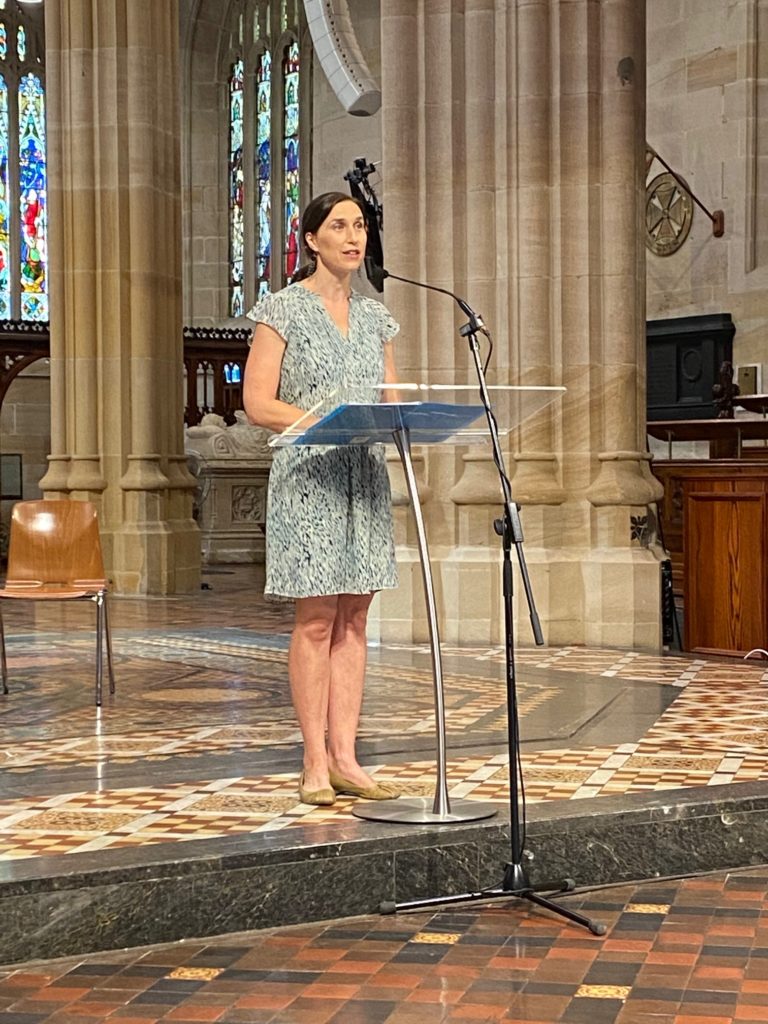
Recently, I gave a 30-minute talk about ‘Living Faith in Front of Our Children’. It was part of a conference run by Mothers Union Sydney. My talk is part of the seminar called ‘Light at the End of the Tunnel’. On the video link, the talk starts at about 1:36:00. On the audio-only link below that, mine is the third talk of the conference. I hope it encourages you today!
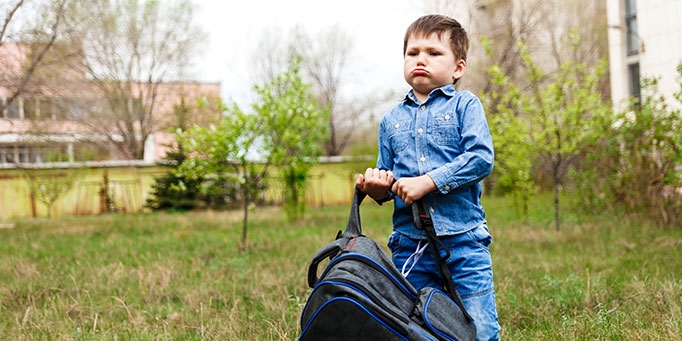
This week our third son started Kindergarten (his first year of school). As I lifted his stiff new backpack onto his shoulders, I asked how he felt. ‘Heavily armoured … and overloaded’, he said. Somehow he felt both protected and burdened.
When the time came for our son to leave with his teacher, he went through the gate with a wave, still bouncing despite the weight of his bag. I waved back with a brave smile, hoping and praying that he would bounce back out just as happily at the end of the day.
To carry or not to carry?
I’ve stood waving and waiting at the school gate for six years now and have witnessed many different interactions. On the first day of school, most parents offer to carry their children’s heavy load of new books and equipment—some kids accept the help but others want to carry their bag alone. After the first day, when the school bags aren’t quite so heavy, most parents leave it to their kids to carry them.
One mother I’ve seen is more of a ‘Sherpa parent’ (yes, that’s a thing!). As soon as her children walk through the gate each day, she swoops in to relieve them of their backpacks. Conveniently, she has two children—one backpack for each shoulder. On the days when a child comes out holding a musical instrument or school project, she swiftly takes that too.
It makes me wonder: should parents carry their children’s backpacks? I think the backpack is also a symbol—of all the loads that our children carry in life. As parents we face the constant dilemma: should we step in to help, or should we leave our kids to it?
Keep reading over at Growing Faith, a Christian online magazine for parents.Find out more about Growing Faith and subscribe to our monthly e-newsletter here.
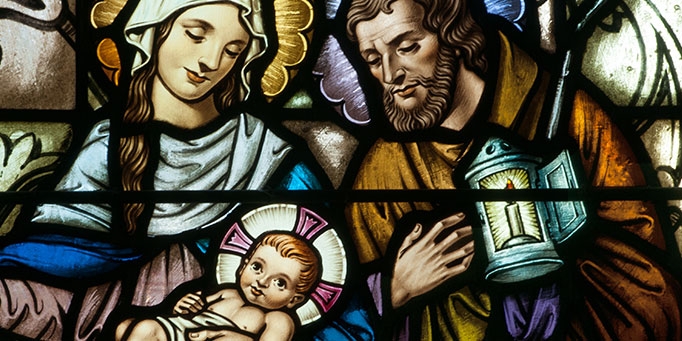
You could say that Jesus didn’t really need a human family. After all, he had God as his Father (Luke 2:49) and his disciples as brothers and sisters (Matthew 12:48–50). As an adult, Jesus never married or had children of his own. Maybe God could simply have sent an adult to carry out his mission of salvation.
But we all know that’s not how the Christmas story goes. God chose for his Son to be born into a human family, raised by a mother and (adoptive) father alongside half-brothers and sisters.
The Christmas story starts with a family. But why?
In 2020 I started working for Growing Faith—a Christian online magazine for parents. Read the rest of this article on their website here. Find out more about Growing Faith and subscribe to our monthly e-newsletter here.
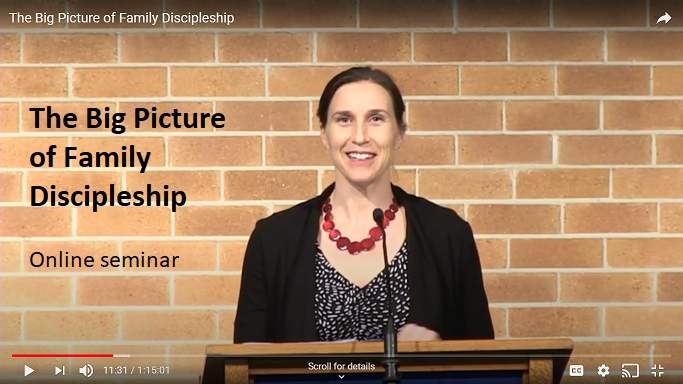
Earlier this year I recorded a 45-minute seminar on ‘The Big Picture of Family Discipleship’. A number of churches have benefitted from screening this seminar online or onsite (or both). It is designed to complement my ‘Big Picture Parents’ seminar and covers:
• What is discipleship?
• What is the process of discipleship?
• What role do parents play in the discipleship of children?
• What strategies can we use to disciple children?
• What if we think we’ve missed the boat?
Please contact me if you or your church would like to make use of this resource.
Across the developed world, mothers are getting older. Many women choose to delay having children so they can first lay a foundation of financial or relational security, or to pursue a career or personal goals. Other women never intended to be “older mothers,” but end up in that situation due to infertility, delayed marriage, or unexpected pregnancy.
I certainly never planned to have a baby later in life—I was too afraid of the risks. I knew that conceiving at an older age would increase my chance of miscarrying or experiencing complications during pregnancy and birth; I knew it would increase my baby’s chance of a congenital abnormality. I took it to heart when my mother once commented, “A woman’s body is designed to have children in her 20s.”
The way it worked out, I only just scraped into the “ideal” window for having children—starting at 28 and finishing (or so I thought) at 34. But this year, at age 39, I’m pregnant again and have come face-to-face with my fears.
In the early stages of my pregnancy, I expected things to go wrong; I didn’t even tell some of my closest friends I was pregnant until the second trimester. Now that the baby appears to be healthy and growing, I’ve discovered new things to worry about. I’ve lain awake at night calculating what age my husband and I will be (ancient!) when our baby finishes high school, gets married, or turns 40. I’ve caught myself looking enviously at younger pregnant women who seem to have much more energy (and far less gray hair!) than I do.
In the midst of my fears, I’m trying to recover a godly, balanced perspective. Here are three truths from Scripture that can encourage women like me who, whatever our intentions or ideals, find our medical records stamped with the words “geriatric mother.”
Update: A healthy baby boy joined our family in early September.
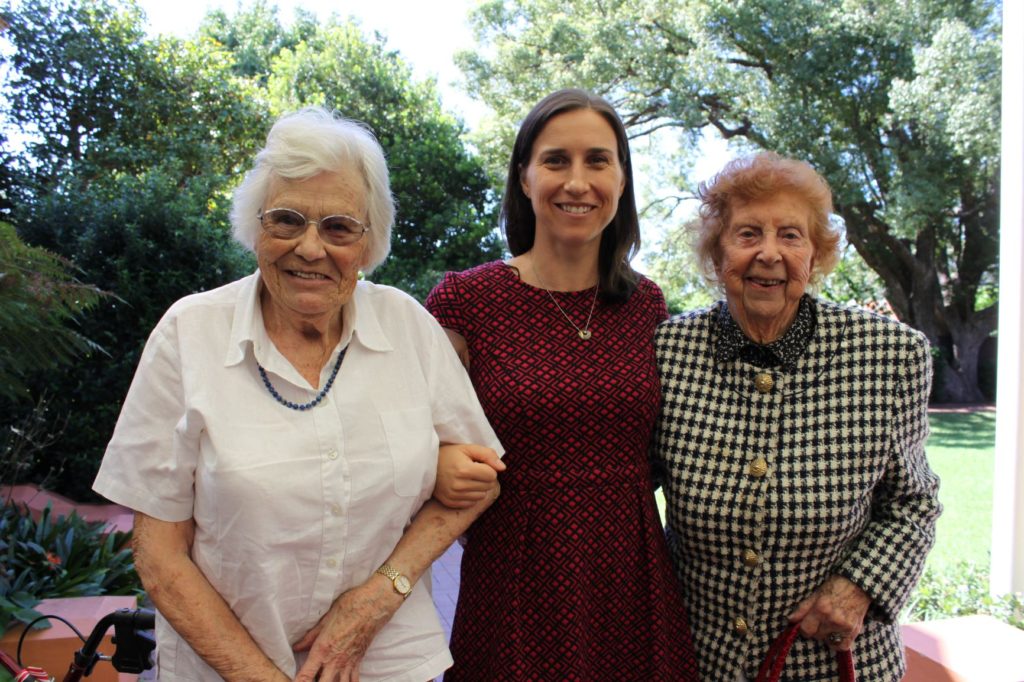
Earlier this month our family farewelled my dear Granny Anne. Less than five days later, we welcomed our newest baby boy into the world. I wrote this poem in honour of my Grandmother.
I wish the span of generations could cross for a longer time, So the smile of great-grandmother could greet this baby of mine.
For our life on earth depends not on the brotherhood of man, Where love is universal, horizontal, hand-in-hand.
No, the thing that most sustains us is the love that’s handed down: When man and wife raise their descendants, care for their familiar crowd.
And in truth, it’s not just love we need descending old to young, We need wisdom, rites and stories for discerning right from wrong.
And when their moon starts waning and our sun is on the rise, The love and care flow upwards; our devotion is their prize.
But the comings and the goings of the people in our clan Can’t be scheduled or predicted—they come from a higher hand.
So don’t go spending all your strength pursuing good out there, Come back home to hearth and heritage. Let’s treasure what is near.
Last time we saw that our children are our apprentices, following us as we follow Jesus to maturity in life and faith. Discipling children is about forming or shaping their heart, mind, goals, habits, character and behaviour into the likeness of Christ, who is the perfect image of God.
Disciple-making at home requires us to be both idealistic and realistic. Firstly, we do need to have ideals to strive for: we need to keep looking to God’s word and to the Word, Jesus, to remind ourselves of what kind of people we are aiming to be and raise.
But we also need to stay realistic, knowing that we and our children will regularly fall short of those ideals. Family discipleship must be built on a foundation of grace:
Be kind and compassionate to one another, forgiving each other, just as in Christ God forgave you. (Ephesians 4:32)
Now let’s look in more detail at how parents can disciple our children.
I recently started working for Growing Faith—a Christian online magazine for parents. Read the rest of this article on their website here. Find out more about Growing Faith and subscribe to our monthly e-newsletter here.
I'm a mother, wife and Bible teacher from near Sydney, Australia. I write about how the Bible's ancient wisdom makes sense of modern life and parenthood.