Harriet Connor

Author of Big Picture Parents

Search results: "1" (Page 7 of 15)

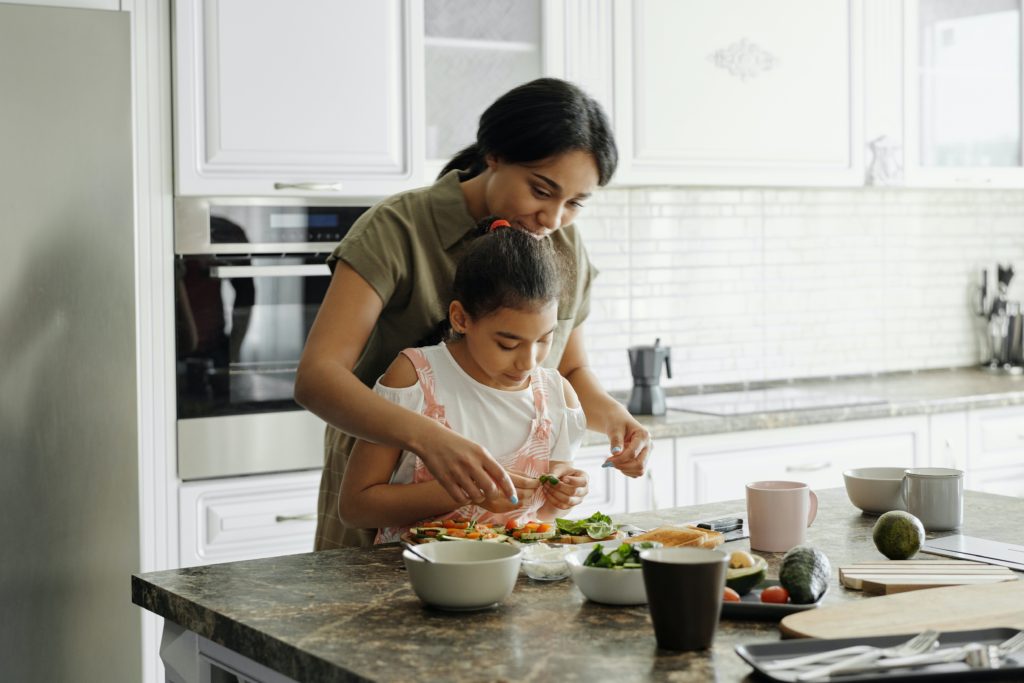
Loving your family is evangelism

I used to think of my university days as my ‘golden age’ of evangelism. I was soaking up great Bible teaching and meeting with other young Christians. I was all fired up to tell people about Jesus. And I did.

I was (perhaps stubbornly) opposed to ‘walk up’ evangelism, so I used to practise ‘sit down’ evangelism instead. I would sit down on a bench or on the train home from Uni and pray for opportunities to talk to friends and strangers. Every week I would have at least one conversation about the gospel; every few months I would find myself giving away another Bible.

When I became a mother twelve years ago, my world shrank considerably. My focus was now primarily on the people within our household. I wasn’t out and about crossing paths with strangers; I certainly wasn’t catching the train and handing out Bibles. It felt like I had stopped doing evangelism.

But as I’ve reflected more on the Bible’s teaching, I’ve realised that, actually, loving my family is not taking me away from evangelism. Loving my family is evangelism. Living in right relationship with the people in our household shows a watching world how good it is to live in right relationship with our Creator.

Jesus said: “Let your light shine before others, that they may see your good deeds and glorify your Father in heaven.” (Matt 5:16) God sets his people apart to live his way so that others might be attracted to God and the gospel. Evangelism—convincing others to glorify their Creator through Christ—includes not just our words but also our deeds. And this starts in the home.
Read More

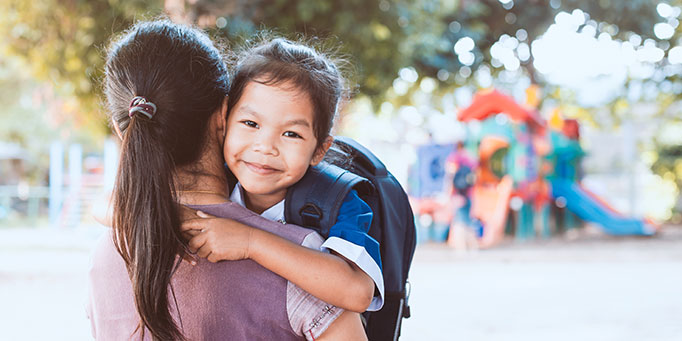
Send them back to school with courage!

This year we’re facing a back-to-school season like no other. With tens of thousands of cases in NSW and around the country, it feels like we’re swimming in a sea of COVID-19.

And yet, school is set to resume as usual.

As parents it’s natural to feel anxious and worried about our children’s safety and to agonise over our decisions concerning their wellbeing. But this may just be the perfect opportunity for us to send them back to school with courage.

Face your fears

Perhaps the hardest thing about being parents this side of heaven is that we cannot keep our children safe 100% of the time. At some point, we have to send our children off into the big wide world, where we can no longer protect them. Sending our children into a school full of germs (COVID-19 or otherwise) is a fitting parable for what it’s like to raise children in a fallen world.

Keep reading over at Growing Faith, a Christian online magazine for parents. Find out more about Growing Faith and subscribe to our monthly e-newsletter here.

God’s plan for your family is bigger than you think

In our age of information, it’s easy to get confused by the cacophony of conflicting ideas about family life that swirl around us. But thanks to a new resource I’ve published, you can take time this year to listen to the voice of God, who designed the human family in the first place. 

Families in God’s Plan is a digital resource featuring 12 Bible studies to help individuals, couples and small groups to understand the place and purpose of families in God’s world. As you read through God’s word, you might be surprised to learn just how big God’s plan for families is.

Bigger than nuclear

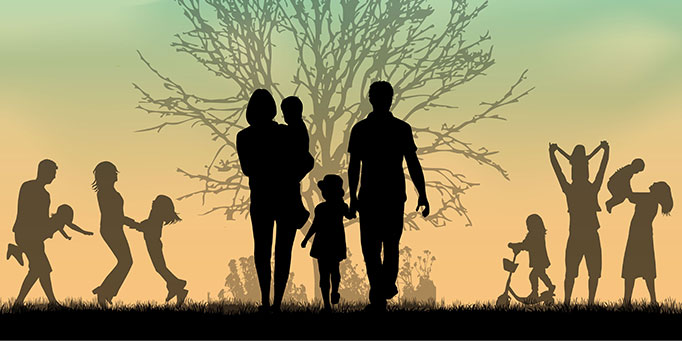
Did you know that the Bible doesn’t even have a word for ‘family’ in the modern, nuclear sense? Both old and new testaments see the family as something much bigger. Like an established tree, a family grows up from the trunk of previous generations; it branches out to include uncles, aunts, cousins and in-laws and it spreads out to welcome outsiders who come to live in its shade.

Read More

Nativity Notes: Angels

Angels play a significant role in the Nativity story, but we don’t tend to talk much about them at other times. It’s natural for children to ask questions about them given the mystery and ‘magic’ that they inspire. It’s time to learn something new about these heavenly creatures, so we can give some helpful perspective when we answer these questions!

What are angels?

Angels are a large ‘host’ or army of heavenly beings created by God to worship him and serve humanity. Unlike God, they can only be in one place at one time (see Daniel 10:12–14). They include other kinds of heavenly beings, like the ‘cherubim’ or ‘living creatures’ who serve in God’s temple (see Ezekiel 10; Revelation 4) and the ‘seraphim’ in Isaiah’s vision of the temple (Isaiah 6). The Bible mentions an archangel, Michael, who leads an army of angels (see Daniel 10:13; Revelation 12:7–8). The only other angel whom the Bible names is Gabriel.

We can’t say with certainty, but God probably created the angels all at once, right at the beginning when he created the heavens. As God says to Job:

‘Where were you when I laid the earth’s foundation?
    Tell me, if you understand.
Who marked off its dimensions? Surely you know!
    Who stretched a measuring line across it?
On what were its footings set,
    or who laid its cornerstone –
while the morning stars sang together
    and all the angels shouted for joy?’ (Job 38:4–7)

What do angels do?

Keep reading over at Growing Faith, a Christian online magazine for parents. Find out more about Growing Faith and subscribe to our monthly e-newsletter here.

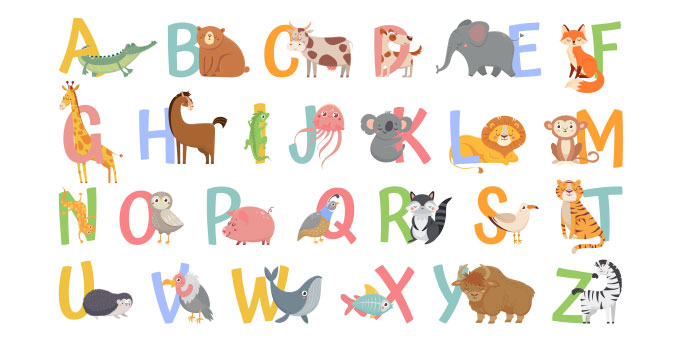
From Aardvark to Zebra: teaching kids to name animals

Have you ever wondered why so many baby books are all about animals? I hadn’t really thought about it until this year when I started dusting off our old books to read to our newest son. I had forgotten just how many of them consist solely of the names and pictures of animals, most of which our baby will only ever encounter if we visit a zoo or a farm.

I find myself naturally pointing out the animals around us too—‘birdy’, ‘doggie’, ‘pussy cat’. When our baby sees the animal I’m pointing to, his face spreads into a smile, and he starts babbling and flapping his arms in delight.

I wouldn’t be surprised if our baby’s first word is ‘da’ for Daisy, our green-eyed grey and white cat. After all, one of his older brothers’ first words was ‘bok’—that was back when we had a few chooks.

A deeply human activity

I’ve been thinking: naming animals is actually a deeply human thing to do. In Genesis chapter 1, it is God who does the naming: ‘day’, ‘night’, ‘sky’, ‘land’, ‘seas’. But by chapter 2, when it comes to the animals, God hands over to Adam:

Now the Lord God had formed out of the ground all the wild animals and all the birds in the sky. He brought them to the man to see what he would name them; and whatever the man called each living creature, that was its name. So the man gave names to all the livestock, the birds in the sky and all the wild animals. (Genesis 2:19–20)

Naming animals is part of our human mandate—to rule over God’s creation, working and taking care of it on God’s behalf. It’s no wonder that we instinctively teach our children to name animals from an early age!

Here are four more reasons why this everyday activity might be more important than you think.

Keep reading over at Growing Faith, a Christian online magazine for parents. Find out more about Growing Faith and subscribe to our monthly e-newsletter here.

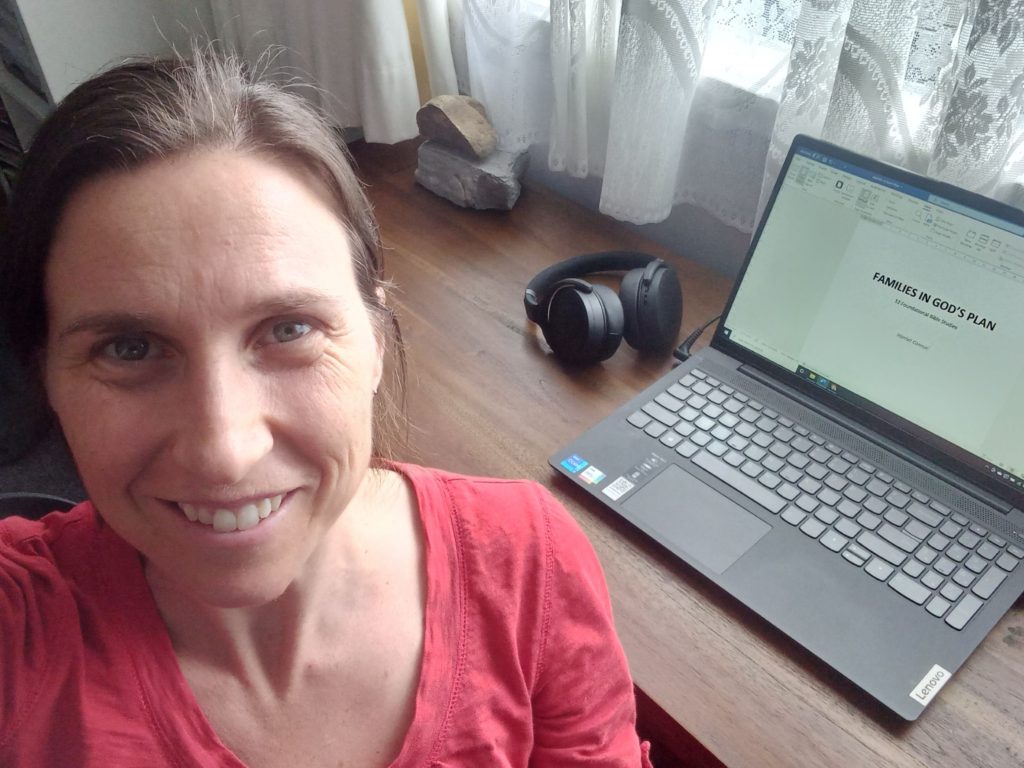
Introducing my forthcoming book: ‘Families in God’s Plan’

Last week I submitted a manuscript for a new book! Families in God’s Plan: 12 Foundational Bible Studies is due for release with Growing Faith (an imprint of Youthworks Media) in time for the start of 2022.

(I should have dedicated the book to my noise-cancelling headphones—I couldn’t have done it without them!)

These studies will help individuals, couples and small groups to see how families fit into God’s plans for the world, from Creation right through to the New Creation. Knowing ‘where we are’ in God’s timeline helps us to understand his purposes for our family.

The studies are for all kinds of people—after all, we all belong to a family—but they will be especially relevant to those who are raising children.

Each study covers two or more Bible passages for you to read and explore, a short reflection from me, some questions to help you apply what you’ve read and a final psalm to prompt your prayers. Each study also includes a ‘Parents’ Talking Point’: a suggested topic for husbands and wives to sit down and discuss together.

I really enjoyed working on this project! The studies bring together many of the things I have learnt about family life since the publication of my first book. They are guaranteed to get you thinking about families in a new light.

At this stage, the plan is for Families in God’s Plan to be a digital resource. You will buy an individual/couple or group licence to download and print a PDF. However, if there is enough interest, Youthworks Media will consider publishing a hardcopy version.

Can you please let me know: would you prefer a digital or hardcopy version of Families in God’s Plan? How many copies would you buy? This will help my publisher to plan the book’s release. Thank you!

Real hope for the perfectly imperfect

In recent articles at Growing Faith, we’ve explored the reality of family life in a fallen world: our families are imperfect, so we need to keep on receiving and showing forgiveness; as parents, we fall short of ‘best practice’, so we’re utterly dependent on God’s grace.

Recent history—with its fires, floods and extended pandemics—has also made it painfully clear that the world our kids are growing up in is imperfect too—we cannot offer them a childhood free from disappointment and suffering.

For modern parents, who tend towards perfectionism, raising children in a fallen world can become excruciating, because nothing ever measures up to our expectations. We can become paralysed by disappointment, guilt, anxiety and fear for our children.

But as Christian parents, we are uniquely equipped for parenting this side of heaven. The Bible explains why we can’t expect perfection of ourselves, our children or the world: because we are living outside of Eden. The Bible also gives us real hope for the future: one day, we and our children (God willing) will live in a new and perfect world, where nothing will ever make us disappointed, guilty, anxious or afraid again.

Knowing our place in the Bible’s timeline can help us to avoid the trap of perfectionism, which is damaging for parents and children alike. For now, what our kids really need are ‘good enough’ parents. Here’s why.

Keep reading over at Growing Faith, a Christian online magazine for parents. Find out more about Growing Faith and subscribe to our monthly e-newsletter here.

A time-tested routine for spiritual formation

During extended periods of lockdown, it’s easy to slip into what I call ‘calendar freefall’—when each day starts to blend and blur into the next, and weeks pass without me even opening my diary. In lockdown it’s hard even to remember what day it is.

When our time is unstructured, it’s easy to fall out of good habits. When we’re not going anywhere, we forget to brush our teeth in the morning. When there are no bells ringing, we forget to stop for morning tea. When we don’t have sports training, we forget to exercise.

This can happen in our spiritual lives too. When we’re not going to church or Bible study, we can go for days without stopping to pray or open up the Bible.

We were made for routine

The truth is that human beings need routine—it’s woven into the very fabric of creation. God made the world in a rhythmical way: he created in six days—each with evening and morning—then rested on the seventh. God also the built into creation the means for marking time: ‘Let there be lights in the expanse of the sky to separate the day from the night, and let them serve as signs to mark seasons and days and years’ (Genesis 1:14). We’re not designed to live in ‘calendar freefall’.

Routines are important because they don’t just shape the days—they also shape us. The things we do repeatedly, every day or every week, become part of who we are and how we see the world. 

Have you ever noticed how athletes take on different physical shapes depending on the sport they practise? If you walked through the Olympic Athletes’ Village, you’d be able to tell the swimmers from the weightlifters, the basketballers from the marathon runners, the archers from the gymnasts. The things we repeat shape who we become, both physically and spiritually.

A Christian daily routine

This lockdown, I wanted to develop a routine to remind me to look to God each day. I also wanted to use this time to help our children to grow in their faith. Drawing on our rich Anglican heritage, I have found a way to do both of these things at once.

In our family we have started using the ancient Christian practice of saying Morning and Evening Prayer (also called the Daily Office) together as a way of shaping our days and ourselves. We say Morning Prayer around the breakfast table, and Evening Prayer sitting on our bed (if we’re not too tired). On Sundays we have a short ‘Family Church’ service of Morning Prayer in the living room.

Our children range in age from twelve down to one, so these daily times of worship are never completely focused or uninterrupted. And we sometimes have to skip over some parts of the service when things are too chaotic. But here are four reasons why I want to persevere with this lockdown routine.

(At the end of this article you can download the services of Morning and Evening Prayer for families that I have compiled.)

Read More

Daily Office for Families

I have compiled services of Morning and Evening Prayer for families to use, especially during times of lockdown.

These services combine elements from a few different Anglican sources and include daily variations for Monday–Saturday. You can be flexible and adapt it to your family’s needs.

If you would like to have ‘Family Church’ on Sundays, head to the Better Gatherings website where you can download ‘Common Prayer for Homes: Resources for Family Worship’ which includes several forms of Sunday worship, as well as prayers to use at other times.

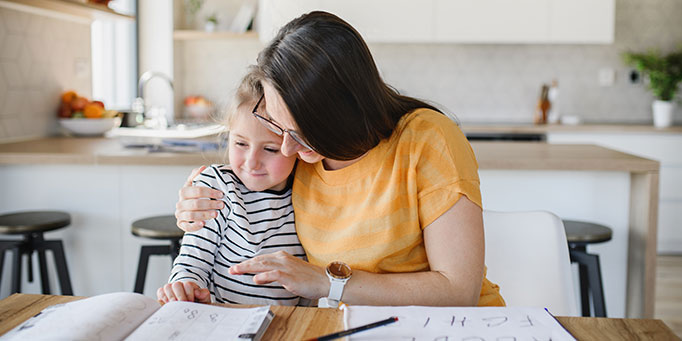
When home education feels too hard, remember this

Well here we are—still stuck at home after months of lockdown. The kids are still home from school and childcare and most parents are still working from home. And we’re struggling. We’re feeling overburdened by the competing responsibilities of working, running a household, caring for younger children and supervising older children’s home learning. It feels like we’re failing at everything!

As modern parents, we’re used to outsourcing our children’s care and education to professionals. But this can leave us feeling unqualified and overwhelmed when it comes to doing these things ourselves.

At this moment in time, when it feels like we’re wearing too many hats, it’s helpful to stop and refocus on our primary calling. There are many activities that can be outsourced to others, but some things only a parent can do. Your children don’t need a perfect home education. They just need you.

We can’t do everything, but we can be there.

The word ‘parenting’ as a verb is a modern invention; previous generations simply called it ‘being a mother or father’. For millennia, society understood that raising children is not a set of activities or techniques that need to be performed—at its heart, parenting is a relationship. Simply having children binds us to them forever by blood and love.

As a parent, you already offer your children something they can never find elsewhere: a sense that they belong to you because they came from you. In the words of the Bible, children ‘bear the image’ of their parents (Genesis 5:3): they resemble and derive from us. No matter how far our children may travel in life, we, their parents, will always represent ‘home’—a place where they belong.

Let’s stop focusing on what we need to do for our children, but on who we already are to them.

Keep reading over at Growing Faith, a Christian online magazine for parents. Find out more about Growing Faith and subscribe to our monthly e-newsletter here.

Page 7 of 15

Powered by WordPress & Theme by Anders Norén