

Harriet Connor

Author of Big Picture Parents

Search results: "1" (Page 6 of 15)

Should we limit our family size for the sake of the planet?

Recently I was speaking to an old friend about the topic of creation care and climate change. Among other things, she suggested that having fewer children was better for the planet. She believes that since global overpopulation is threatening the sustainability of the earth, Christians have a duty to avoid having and promoting large families.

Indeed, a study released in 2017 came to the conclusion that having one less child would reduce your carbon dioxide emissions by 58 tonnes per year—far more than selling your car, avoiding long flights or becoming a vegetarian.

I know some Christians who have taken this to heart and decided to limit their family to two children. They see this as a way of loving their global neighbours who would be the most affected by climate change.

To get a broader perspective, I asked a handful of others to contribute their thoughts for this article.

The twin creation mandates

Christians who prioritise creation care are seeking to live out our God-given mandate to rule over—or ‘work and take care of’—the creation on God’s behalf (Genesis 1:26–29; 2:15). But this mandate is inextricably linked with another: to be fruitful, multiply and fill the earth. We have and raise children to become our co-workers and eventually our successors in carrying out our first creation mandate from God.

Keep reading over at Growing Faith, a Christian online magazine for parents. Find out more about Growing Faith and subscribe to our monthly e-newsletter here.

When you’re feeling the pinch

How do you feel when you’re standing at the petrol pump or the checkout these days, as you watch the numbers on the display rise higher and higher? If you’re anything like me, your stress levels start rising in sync with the mounting tally.

Right now, many of us are feeling the pinch of the rising cost of living. So how can we and our families face financial stress in a healthy way?

Look up

It’s times like these when we really have to depend on God, the ultimate provider. Like the rest of creation, we must look to the one who ‘feeds the birds of the air and clothes the flowers of the field’ (Matthew 6:26–30).

With empty hands and heavy hearts, we can cry out, like the psalmist did:

1 I lift up my eyes to the mountains—
where does my help come from?

2 My help comes from the Lord,
the Maker of heaven and earth. (Psalm 121:1–2)

With the kids
We don’t need to explain the finer details of our finances to our children. But we do need to pray together as a family, asking God to provide for us. This shows our children that we’re depending on God, even when we’re feeling anxious. We could read Psalm 121 or Matthew 6:25–34 together.

Set your priorities

As our parents always said, ‘Money doesn’t grow on trees’! We can’t produce more of it, but we can choose how we spend the money we have.

It’s a good idea to sit down with our spouse and make a weekly or monthly budget. We can start by listing out how we currently spend our money and talk about our priorities going forward.

You might look at expenses like: everyday food, dining out, takeaway coffee, schooling, housing, cars, insurance, holidays, giving to church/charity, kids’ music lessons and after school activities.

Which things are non-negotiables for us, and which things can we change or compromise on?

With the kids
In our family, we don’t just say ‘We can’t afford it’ about something the kids want. Rather, we emphasise that it’s all about how we choose to spend our money. We tell them our priorities—a suitable house, healthy food, clothes to wear, education—and explain that the new toy or experience they want just doesn’t rank as highly. We also tell them that when they grow up, they can choose to spend their own money however they like!

Ask for help …

Keep reading over at Growing Faith, a Christian online magazine for parents. Find out more about Growing Faith and subscribe to our monthly e-newsletter here.

Responding to rainbow days at school

Last year a new Principal started at our children’s school. One of her first initiatives was to hold Wear It Purple Day in the high school—a decision that has had a huge knock-on effect at the school and in our family. Since then, the school has added other ‘rainbow days’ to the calendar, such as the International Day Against Homophobia, Biphobia and Transphobia in May.

With Wear It Purple Day coming up again soon, I’m sure our family is not the only one facing the dilemma: how should Christian parents and children respond to ‘rainbow days’ at school?

What is the aim of these days?

These kinds of days were founded in response to concerns about the mental health of young people who might be questioning their sexuality and gender identity. In the words of the event organisers, Wear It Purple day aims to:

  • Advocate for and empower rainbow young people
  • Celebrate and promote the value of diversity and inclusion in all community settings
  • Raise awareness about sexuality, sex and gender identity and challenge harmful social cultures
  • Champion rainbow role-models to help young people establish the confidence to be who they are.

Schools might mark these days in a number of ways, including changes to the uniform, fun activities, special assemblies, and targeted lesson content.

Is holding a ‘rainbow day’ the best way to help children?

We live in a society where waving the rainbow flag is seen as a harmless—even necessary—expression of solidarity with people who have previously been marginalised, maligned and mistreated. Choosing not to wave (or wear) the rainbow flag is therefore interpreted as an expression of ‘phobia’, bigotry or hatred towards those people.

But it’s not as simple as that.

When it comes to children and young people, the real question is ‘What is the best way to help young people develop a healthy view of sexuality and gender?’ And for a number of reasons, I’m not sure that a whole-school ‘rainbow’ day is the answer.

Read More

Take your kids to funerals

At some points in history (and in some circles today), parents have considered it inappropriate for children to attend funerals, even for their close family members. Perhaps parents want to shield their children from the harsh reality of death; perhaps they worry that their children’s behaviour will distract the other mourners. But on balance, I believe that there are far more reasons in favour of bringing the kids along when we attend a funeral. Our kids have now been to five funerals in as many years.

Better a house of mourning

The writer of Ecclesiastes observed:

‘It is better to go to a house of mourning
than to go to a house of feasting,
for death is the destiny of everyone;
the living should take this to heart.’ (Ecclesiastes 7:2)

Attending a funeral forces us and our children to confront our human mortality. While that is a frightening thing, our children will not be doing it alone, but with us right by their side. Going to a funeral will be part of an ongoing conversation between us and our children about death. It’s certainly an uncomfortable topic, but avoiding it will only leave our children unprepared for real life. Children should feel free to ask their questions, and we should do our best to answer them in an honest, but age-appropriate way, balancing realism with hope.

Funerals are certainly confronting. The deceased person’s coffin is often right there up the front—usually closed, with flowers and photos sitting on top of it—until the end of the service, when it is carried away for cremation or burial.

Putting flesh on the gospel

As Christians, we have the advantage of knowing (at least to some extent) what happens when a person dies. We know that in death, a person’s spirit leaves their body; but we also know that God will put that person back together at the resurrection. As Christians, we ‘do not grieve like the rest of mankind who have no hope’ (1 Thessalonians 4:13).

A funeral, especially a Christian one, is a wonderful opportunity to teach our children the gospel in a very tangible way. Jesus was a real flesh-and-blood person, who chose to die for us. He did this to save us from the just condemnation of God for our sins. And Jesus really rose up from the grave, showing that he has defeated sin and death forever. Everyone who puts their life in God’s hands will rise again like Jesus one day.

Keep reading over at Growing Faith, a Christian online magazine for parents. Find out more about Growing Faith and subscribe to our monthly e-newsletter here.
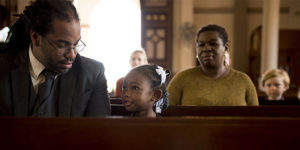
Please invite my kids to your wedding!

I know it’s been a tough few years for weddings. The COVID-19 pandemic forced many engaged couples to postpone and then eventually downsize their weddings. Under those circumstances, I can completely understand receiving a wedding invitation with ‘no children’ written apologetically at the bottom.

But now that life—and weddings—are returning to normal, I wanted to ask a favour on behalf of Christian parents. Please, invite our kids to your wedding!

Our kids are growing up in a society that is very anti-marriage. Their generation encounters divorce far more frequently than ours ever did. They are also much more familiar with de-facto relationships, where couples never marry at all, even if they have children together. Our kids live in a society that largely views marriage as ‘just a piece of paper’ which makes no material difference to a relationship. In fact, 80% of Australian couples now live together before they get married. We want to tell our children that marriage is significant and lasts ‘forever’, but they are surrounded by evidence to the contrary.

Our society’s view of marriage has shifted dramatically in recent decades, which means that Christian marriage is increasingly distinct. Almost 80% of couples now choose to be married by a civil celebrant rather than a minister of religion. The two visions of marriage—and the weddings that celebrate them—are completely different.

Keep reading over at Growing Faith, a Christian online magazine for parents. Find out more about Growing Faith and subscribe to our monthly e-newsletter here.
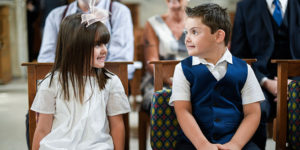
Why I don’t believe in (just) parenting

I’ve been thinking and writing about family life for almost ten years now. As I’ve gradually developed a fuller understanding of God’s vision for families, there’s one word that I have, quite intentionally, dropped from my vocabulary. It’s the word ‘parenting’.

You see, the word ‘parenting’ is a modern invention and carries with it a number of very modern assumptions that I believe are generally unhelpful. God’s vision for parents and children is so much more than what we call ‘parenting’. (Of course, the word is still a useful shorthand, so you’ll find me using it occasionally!)

Let me tell you why I no longer believe in (just) ‘parenting’.

[This article is partly based on a conversation I had with God’s Story Podcast about my new Bible study booklet, Families in God’s Plan: 12 Foundational Bible Studies.]

It’s not just a verb

My main problem with the word ‘parenting’ is that it’s a verb, making it all about what we do. Parents in previous generations simply spoke about being mothers and fathers and I think that’s a more helpful way to look at things. You don’t have to do anything to become a parent—you already are one! That’s equally true whether you’re sitting in an armchair reading a book (alone!) or sitting on the floor playing with your children. We’re all full-time mums and full-time dads—and will be for the rest of our lives.

The most important thing is our relationship with our children. Everything else we might do (or not do!) needs to flow from that.

It’s not just present-tense

The other thing about the verb ‘parenting’ is that it’s always in the present tense. This puts the focus on what we’re doing right now, rather than on what we’re aiming for in the long term. Dealing with the things that seem urgent today—surviving our toddler’s tantrum; getting dinner cooked, served and eaten; stumbling over the ‘finish line’ of bedtime—can sometimes distract us from working towards longer-term goals.

I like the term ‘raising children’ because it inherently looks to the future: it begs the question, raising children into what? It forces us to think about what kind of adults we want our children to grow into, and work backwards from there.

Psalm 78 describes God’s long term vision for child-raising with these words:

‘… we will tell the next generation
the praiseworthy deeds of the Lord,
his power, and the wonders he has done.
He decreed statutes for Jacob
and established the law in Israel,
which he commanded our ancestors
to teach their children,
so the next generation would know them,
even the children yet to be born,
and they in turn would tell their children.
Then they would put their trust in God
and would not forget his deeds
but would keep his commands. (Psalm 78:4b–7)

It’s not just an abstract technique …

Keep reading over at Growing Faith, a Christian online magazine for parents. Find out more about Growing Faith and subscribe to our monthly e-newsletter here.

Let them wrestle!

Why do dads throw their babies up into the air? Why do dads chase, tickle and wrestle their kids until they are on the verge of tears?

This kind of play can be hard for mothers to understand. We watch on with rising concern; we worry that someone will get hurt, or that the kids are experiencing real fear behind their giggles. We can be tempted to put a stop to the whole thing, because it makes us feel uncomfortable.

However, rough-and-tumble play is vital. It teaches children important life skills and helps them to develop a special relationship with their dad.

Dads naturally play ‘rough’

Mothers and fathers tend to interact with their children in different ways: mothers prioritise care and nurture, while fathers prioritise play and challenge.

The Bible assumes rather than teaches this fact, but we get a glimpse of it in Paul’s comments to the church in Thessalonica:

‘But we were gentle among you, like a nursing mother taking care of her own children. So, being affectionately desirous of you, we were ready to share with you not only the gospel of God but also our own selves, because you had become very dear to us … For you know how, like a father with his children, we exhorted each one of you and encouraged you and charged you to walk in a manner worthy of God, who calls you into his own kingdom and glory.’ (1 Thessalonians 2:7–8, 11–12)

When it comes to play, fathers generally initiate games that are challenging, active and physical:

‘Fathers emphasize more competition, risk-taking, and independence while mothers stress more self-paced play, that is, mothers tend to encourage more play that is at their child’s level.’ (‘Gender Matters’, Them Before Us)

Rough-and-tumble play is good for both boys and girls, especially around the ages of 3–7. Although younger children also enjoy more gentle activities such as being bounced, lifted up or chased. If you’re new to this kind of play, a good place to start is to become some kind of ‘Daddy monster’ and challenge your kids to chase and capture you. With older children, you could have a ‘sock wrestle’, where each person tries to remove the other person’s socks without losing their own.

Researchers have identified the features of ‘high quality’ rough-and-tumble play:

• A safe environment (for example, on a soft surface)
• A few rules or boundaries (for example, no kicking or biting)
• Dad self-handicaps so that children can sometimes overpower him
• Mutual enjoyment
• Children have time (and possibly help) to wind down at the end.

The benefits of rough-and-tumble play …

Keep reading over at Growing Faith, a Christian online magazine for parents. Find out more about Growing Faith and subscribe to our monthly e-newsletter here.

The things we learn when we’re at home sick

It’s official! Cold and flu season is upon us. Winter has barely started and our family has already been knocked down by one thing after another. It’s been a brutal reminder that there are still plenty of ‘Diseases Other Than Covid’ about. Maybe you know the feeling: when you start losing track of who’s had what and when, and you’ve got the school office/absentee line on ‘speed dial’.

But when we are home sick, there are some important life lessons that we and our children can learn together.

Part of life

When our children were little, I used to get shocked every time they got sick. I would rack my brains trying to work out where they might have caught the illness, and how I could have prevented it. I expected that with good hygiene and healthy food I could keep the kids healthy 100% of the time.

My perspective changed when a friend pointed out that it’s quite normal for preschoolers to get up to six (or more!) colds per year; in fact, that’s how their immune system develops.

Actually, my friend’s perspective was much more biblical than mine. Getting sick is a tangible reminder for us and our children that we live outside Eden, where every good thing is prone to disease and decay. Sickness reminds us of our own mortality.

We can point ourselves and our children to our perfect future home with God, where ‘He will wipe every tear from their eyes. There will be no more death or mourning or crying or pain, for the old order of things has passed away’ (Revelation 21:4).

But in the meantime, all we can say to our kids is that unfortunately, getting sick is part of life. The question is not whether we will get sick, but how we can manage when we do. And we are extremely fortunate to have modern medicine to help us through the most common illnesses we face.

Even mummies and daddies …

Keep reading over at Growing Faith, a Christian online magazine for parents. Find out more about Growing Faith and subscribe to our monthly e-newsletter here.

Erasing mothers is not progress

Everywhere you look, mothers are being erased.

In the name of inclusion and diversity:

  • Barnardos has cancelled its ‘Mother of the Year’ award
  • Volunteers from the Australian Breastfeeding Association have been investigated for their use of the word ‘mother’ on social media
  • The Labor Party has removed the word ‘mother’ from its policy documents

The reasoning goes: some families don’t have a mother and some mothers identify as ‘fathers’, so we should stop using sexed language for parents altogether. In the modern family, ‘mother’ and ‘father’ have been replaced by Parent 1 and (if you’re lucky) Parent 2.

Sadly, mothers are also being erased, not just from our speech, but from children’s lives. There have been some recent high-profile cases of men ‘creating’ children through surrogacy, with the intention of raising them without a mother. Depending on the arrangement, a baby can have–and lose–up to three different ‘mothers’: a genetic mother, a birth mother, and a social mother. And we are supposed to applaud.

I understand how normalising ‘diverse’ families can help the children of those families to feel less stigmatised, but deliberately removing mothers cannot possibly be called progress. This forced political correctness–telling children that mothers are optional and interchangeable–is a denial of biological reality and human need.

Read More

Mum, who are those faces on the telegraph pole?

There’s no escaping the fact that an election is coming. This provides a great opportunity to talk with our kids about how our democracy works. Here’s how you could answer your kids’ questions.

Who is the government?

The ‘government’ is a group of ordinary people who have the responsibility of leading our country. They make laws to help us live together in peace and safety, and they help and provide for people in different ways.

In Australia there are three levels of government: the local government looks after local concerns, like garbage collection and playgrounds; the state government manages bigger things like schools and hospitals; and the federal government looks after things that affect the whole country, like protecting Australia and representing us to the rest of the world. It also looks after ‘welfare’, which means giving money and services to help people in need.

The Bible says that we should respect our governments because they are ‘God’s servant for your good’, with authority from him to reward good and punish evil (Romans 13:1-7).

Is the government rich?

In Australia, most of the money that the government has comes from collecting ‘tax’. That is when we give a bit of the money we earn to the government so that it can do its job. It is the federal government that collects most of our tax money and decides how to spend it.

The Bible encourages us to pay the taxes we owe to the government, because it is being used to serve us (Romans 13:6–7).

Can the government do whatever it likes?

No. In Australia, we have a ‘Parliament’—a place where representatives from every part of Australia come together to talk and make decisions. The government is only made up of the representatives from one party or ‘team’—the one which has the most number of people in the Parliament. There are a few different ‘teams’: the red team, the blue team, the green team … and some newer teams like the orange and yellow ones. Each team has different ideas about the best way to run our country, relate to other countries and help people in need.

In the Parliament, the representatives from different teams discuss and debate the laws that the government wants to make or change. A law can only be passed if most people in the Parliament agree to it.

What is an election?

Keep reading over at Growing Faith, a Christian online magazine for parents. Find out more about Growing Faith and subscribe to our monthly e-newsletter here.

Page 6 of 15

Powered by WordPress & Theme by Anders Norén