Harriet Connor

Author of Big Picture Parents

Search results: "1" (Page 2 of 15)

Why do Christians fight in wars?

On occasions like Anzac Day, our kids can come up with some tricky questions. One that we’ve had to keep talking about as a family is whether it’s OK for Christians to fight in wars.

It’s not ideal

The first thing to talk about with our children is the fact that war is a product of living in a fallen world full of sinful people. Wars would not happen if groups of people were able to live side-by-side in perfect harmony—sharing their resources without greed or covetousness, overlooking the differences between them and treating one another with mutual respect.

But ever since humanity fell into sin, groups of people have been fighting against each other. Wars usually start because of disagreements over land, resources, leadership or ideology. Our children won’t find it hard to recognise the seeds of these kinds of disagreements in their own hearts and relationships, especially with their siblings.

But war always results in the destruction of life and property; it always affects both soldiers and civilians; it always ushers in a general state of instability, scarcity, distrust and fear.

War is never a good thing, even if it may sometimes be deemed necessary.

It’s not forever

War is a tragic consequence of living in a fallen world. Which means that war will no longer be present in the new heavens and new earth that God will bring about when Jesus returns. As Isaiah said:

In the last days,

the mountain of the Lord’s temple will be established
as the highest of the mountains;
it will be exalted above the hills,
and all nations will stream to it.

Many peoples will come and say,

Come, let us go up to the mountain of the Lord,
to the temple of the God of Jacob.
He will teach us his ways,
so that we may walk in his paths.’
The law will go out from Zion,
the word of the Lord from Jerusalem.
He will judge between the nations
and will settle disputes for many peoples.
They will beat their swords into plowshares
and their spears into pruning hooks.
Nation will not take up sword against nation,
nor will they train for war anymore. (Isaiah 2:2–4)

We long for that day when God will ‘break the bow and shatter the spear’ wielded in war (Psalm 46:9). How much more so our Christian brothers and sisters living in warzones across the globe!

It’s not personal

Our kids may notice the seeming contradiction between the commandments ‘Do not murder’ and ‘turn the other cheek’ and Christians fighting in a war, where they may have to end another person’s life. So it’s important to help our children understand the difference between murder and killing.


Read More

When children wander from the faith

As Christian parents we have to live with an uncomfortable tension. Our parenting matters—indeed God instructs us to raise our children in the Christian faith—but ultimately, it is only God who can give saving faith to our children.

We long for our children to grow up knowing, loving and following Jesus, just as we do. We do all that we can to pass on our Christian faith through our example, our teaching and our family routines and priorities. This is what we explored in the last episode of Timeless Parenting: how we can equip our children to stand firm in the Christian faith, especially in an increasingly hostile world.

But in this follow-up episode, we discuss the confronting reality that, despite our best efforts, not all of the children of Christian parents choose to keep following Jesus. This is a great test of our own faith—will we keep trusting God, even if our children wander away from him?

In this conversation, we are joined by guests Kat Ashton Israel and Al James as we explore:

  • Why do Christians feel uncomfortable discussing this topic?
  • How does it impact parents (and their faith) when a child ‘wanders’ from God?
  • If we can’t guarantee our children’s faith, what is our role?
  • How can we respond helpfully to our children’s questions and doubts about Christianity?
  • How can parents respond when a child walks away from church and Christianity?
  • How can our churches better support families with children who have ‘wandered’?

This episode offers real stories and helpful insights, as well as empathy and encouragement for parents and churches who are experiencing the heartache of seeing young people walk away from faith.

For more on this topic, you can read Kat Ashton Israel’s chapter ‘Teenage faith: doubters, drifters and deserters’ in Parenting in God’s Family.

You can also find our podcast on SpotifyApple Podcasts and other platforms.

If you want to get in touch with us to offer some feedback or suggest a topic, you can write to us at: timelessparenting@youthworks.net

Timeless Parenting is brought to you by Growing Faith, a ministry of Youthworks Media, and Mothers Union Sydney.

But God is their inheritance

Every family I know seems to be feeling financially stretched at the moment. Our income just doesn’t seem to go as far as it used to. Many families are living pay cheque to pay cheque, with little left over at the end of the month. We’re taking on extra work; we’re selling our second cars; we’re eating less meat. We’re always trying to ‘get ahead’ and put something away for a rainy day. But the money just seems to evaporate.

It’s like pouring water into a dry well. We’re trying and trying to fill it up. But the earth is so parched, it just soaks the water up and we’re running on empty again.

As Christians, we trust in God to provide for us. We believe in the one who said:

‘ … do not worry about your life, what you will eat or drink; or about your body, what you will wear. Is not life more than food, and the body more than clothes? Look at the birds of the air; they do not sow or reap or store away in barns, and yet your heavenly Father feeds them. Are you not much more valuable than they?’ (Matthew 6:25–26)

As Christians, we pray each day for God to ‘give us today our daily bread’ (Matthew 6:11)—and he always does! But he rarely seems to give us a whole month’s provision to ‘store away’ in advance.

Then kids come along

Before having children, this kind of living by faith day-to-day can seem like an adventure. We pray and trust … and then we see God provide what we need just in the nick of time. But once we have children depending on us, having a near-empty bank account or fridge is just plain stressful. We can feel like we’re failing at ‘adulting’.

Those of us who have ‘baby boomer’ parents see them living very comfortably. They’ve worked in steady jobs and retired with a healthy amount of superannuation. They own houses, caravans, investment properties and can afford to go travelling. They seem to have enough left over to help us out when we need it.

But when we look at our own financial situation, we can start to wonder if we will ever build up any kind of inheritance to hand over to our own children—we’re struggling just to afford to live. We can start to feel guilty and afraid that perhaps we won’t have much material wealth to pass on to the next generation.

Read More

The value of a ‘small’ Christian life

I grew up in Sydney—a vast city with an ever-growing population and a never-ending list of things to do and see. In Sydney, you can find just about anything or anyone if you travel far enough. It’s a world of opportunity, with very few limitations. What an exciting place to grow up!

But in our first year of marriage, we moved to the regional area where my husband grew up. Our ultimate plan was to head to Europe as missionaries (how exciting!), but out of the blue, we were offered the chance to gain some ministry experience by serving in an Anglican church outside of Sydney. After four years, with one toddler in tow, we ended up moving a few postcodes over to serve in another church in a regional town.

Thirteen years and three more sons later, we’ve had one church change and a few job changes for my husband, but we are still living in the same town. Part of the reason we have stayed put is that my parents generously helped us to buy a house here a number of years ago.

Since then, a strange thing has happened—our whole world has now shrunk down to this one small regional town. Our older kids have moved to a Christian school here, our youngest was offered a preschool place in the town, I have taken up part-time work a few blocks away from that, I now teach SRE in the local primary school … and even our sons’ Cadets unit moved to a new HQ—at the end of our street! I never have to travel more than six minutes in my normal weekly routine.

The life we have now is quite a contrast from the way I grew up. So what are the things I’ve noticed about the value of living a ‘small’ Christian life?

Read More

Sharing earth

During the second Covid lockdown, I decided to start a veggie garden. In those days, home had become our world; the street, our universe. And I wanted to make our home one that was growing and thriving—a place that nourished our family.

So I ordered some soil—four cubic metres, to be precise—which arrived the next day in one big dump in front of our side gate.

As it turned out, that was far too much earth.

For a couple of weeks, the mound just sat there—warm, dark and full of worms. To be honest, I wasn’t quite sure how to move so much soil. Until one afternoon, when the kids from our street had come to our front yard to play. I interrupted their chalk drawing to ask, “Who wants to help me fill up this wheelbarrow and start shifting the dirt?” A chorus of voices responded with bright enthusiasm. One of the girls even ran home to get another shovel.

And so we made a start—me, my kids and the neighbours’—one spring afternoon in our street.

We made quite a few trips to the backyard with that awkward barrow. It was difficult to direct something so heavy—it kept keeling over to one side as we tried to push it up over the lawn and tip it out into a garden bed. The kids took turns to shovel, push, tip and spread out the new earth, ready for planting. I walked beside the wheelbarrow, keeping it steady with my hands. It was hot and heavy work.

After a while it was time to stop and take a break in the shade with some ice-blocks. I thanked the kids for their help. We had certainly worked hard, but when we looked back at the mound, we had barely made a dent. There must have been a dozen more barrowfulls of soil still sitting out the front of our house.

While we were resting, one of the girls saw some succulents growing in a pot. “I love succulents!”, she said. So I went to the shed and found her a small pot. We filled it with earth from the pile and popped a cutting in the top. Well, that was one more way to move a bit of dirt.

Over the next few weeks, I spoke to all the neighbours in our street. “Take some earth!”, I’d say. “I ordered far too much.” My miscalculation was clear for all to see.

Gradually, the neighbours’ polite laughter turned to genuine interest.

First of all, our neighbour from Number 10 came with his empty wheelbarrow and transported a few loads back to his garden. He was planting some cherry tomatoes, beans and cucumbers. I know this because he would later bring us bags and bags of produce to share. That summer we had so many cucumbers between us that I taught myself to make pickles!

Next, the family from Number 12 came over for a load. They had never seen behind our fence before, so I showed them around. Here’s where we moved the washing line, that’s where my husband made the flower beds, this is our ugly, overgrown raspberry bush. Those neighbours were taking soil for their flower beds. Later I would witness the colours of a cottage garden come to life around the edges of their yard, crowding pinks, purples, yellows, whites—even blues. My favourites were the soft pink hydrangeas that reminded me of my grandmother. (Our neighbours sent me home with a big bunch the day I told them that.)

Around that time, I started noticing a beautifully kept garden that I passed on my way home each day. They had strung up neat rows of hanging pots spilling over with splashes of green, purple and red. I thought maybe something like that would look pretty at our place. One day, one a whim, I stopped outside the house to take a closer look. It so happened that the couple who lived there were out working in the garden. I told them I had been admiring their garden and they invited me to come in and look around. By the time I left, I had two new friends and a box full of cuttings.

The next week I bought some hanging pots, filled them up with more of our soil and planted the cuttings I had been gifted.

That first experience of ‘green generosity’ made me bold. From then on, whenever I noticed a plant that I liked growing in the garden of a neighbour or friend, I would ask them for a cutting. No one ever said no. I think we all recognise that whatever springs up from the earth is a gift to us—it’s not really something we own or control in the first place. As the earth—and its Creator—have been generous with us, so we can be generous with our neighbours.

So now, most of the plants in my garden started life in someone else’s. And many of our neighbours’ plants started life in our excess soil. To me, these green, growing things symbolise the tendrils of human relationship that bind a neighbourhood together. We gratefully receive; we generously give.

And so, there’s a kind of trust building in our street with every passing year. Funnily enough, I think it was lockdown that really got us started. Now it’s not just our home, but the whole street that’s growing and thriving; it’s a place that nourishes not just our family, but the whole neighbourhood. And to me, living in a neighbourhood that’s grounded in gratefulness and generosity is the very best thing about Wyong.

Talking with kids about Valentine’s Day

My husband and I don’t really ‘do’ Valentine’s Day. The day has always felt too commercialised for our liking. I think that probably means I’ve never received or given anything for Valentine’s Day in my whole life!

It’s easy enough for someone of my age and stage to disregard the Valentine’s Day messaging around me. But what about our teens and pre-teens—is Valentine’s Day a ‘thing’ for them? Here are some ways that we can open up meaningful conversations with our kids on the topic of romance. First, some history.

How did Valentine’s Day start?

Saint Valentine’s Day originated as a Roman Catholic (and later Anglican) feast day honouring a martyred saint of that name. According to the earliest tradition, Saint Valentine was simply a priest who cared for fellow Christians who were being persecuted by the Roman Emperor Claudius II in the third century and was eventually executed himself.

One later legend claims that, on the eve of his execution, Saint Valentine wrote a note to his jailer’s daughter, whom he had befriended and healed of blindness, and signed it ‘Your Valentine’. Another common legend is that Saint Valentine also defied the orders of Emperor Claudius II, who had forbidden young men from marrying (as it would prove a distraction from fighting Rome’s battles). According to this legend, Saint Valentine secretly performed Christian weddings for young couples.

These later legends gained popularity around the time of Geoffrey Chaucer (14th century), whose poem The Parlement of Foules associated Saint Valentine’s Day with romantic love. From then on, February 14 became a day when men and women would send messages to their lovers.

Valentine’s Day today

Valentine’s Day has become a commercialised celebration when couples are expected to demonstrate their love by exchanging cards, gifts, chocolates, flowers and spending time together. In a co-ed school environment, Valentine’s Day is often seen as an opportunity for people (especially boys) to send a message, card or token of affection to someone they like and ask them to be their ‘valentine’.

Whether Valentine’s Day is a ‘thing’ or not, our tweens and teens are growing up in a world where romance is a constant topic of conversation and a potential source of angst or disappointment. Here are some things we can ask and talk about with them.

Talking points

Are people at school talking about Valentines Day?

We can begin by trying to understand what expectations our teens and their friends have for this day of the year. When I asked my kids, they said it wasn’t really a big deal at their school. But in other schools it may be.

Are there many couples forming in your year?

This is a good general question for broaching the topic of teen romance without asking our kids for too many details. It helps us to understand whether there is a lot of pressure to ‘pair off’ in their school environment.

With our older sons, I try to open up conversations about romance, giving them the opportunity to share if they want to. But I don’t push for details if they seem to want to keep things private.

Do you wish you had a ‘valentine’?

Some teens may feel disappointed if they haven’t attracted any romantic attention from a special someone. It’s good to acknowledge our child’s feelings, even if the dramas of teen romance seem petty to us. We can share our own memories of what it was like to feel overlooked and left out, or to have our romantic feelings go unrequited.

In a future article we will consider how to say ‘no’ when you don’t want to go out with someone.

What do you think being ‘boyfriend and girlfriend’ really means?

This is a helpful way to understand what our kids really mean when they talk about people ‘going out’. Does it simply mean sitting together at school and calling or texting each other after school? Is it normal for kids to hold hands and kiss in the playground at their school? (At our kids’ school ‘PDAs’ are not allowed!) Does it mean going out and doing things together on the weekend? Is this usually done alone or in a group? Are our kids in a context where it’s normal for couples to spend time alone together at each other’s houses?

We may then be able to offer our perspective on healthy expressions of teenage romance.

A crush is just feelings

As we talk with our older children, we can explain that having romantic or sexual feelings for another person is a natural part of growing up. Their adolescent brains and bodies are preparing to seek a marriage partner. We can ask them what it’s like to experience these feelings—what happens in their body and mind when that special person is nearby? (For more on this, see Patricia Weerakoon’s helpful book for teenagers, Teen Sex by the Book.)

What sort of person …

To read the rest of this article head over to Growing Faith, a Christian online magazine for parents. Find out more about Growing Faith and subscribe to our monthly e-newsletter here.

Family holidays are worth it!

What are your strongest memories of family holidays growing up? Was it the time when you saw your parents finally relax and have fun with you? Was it that amazing mountaintop view or waterfall swim? Was it the bushwalk that went horribly wrong? Or was it the time you went camping and it rained the whole time?

The truth is that holidays are more important for our families than we realise. And holidays are about much more than just having fun. After all, our families remember and talk about the bad holidays as much as we do the good ones.

A family holiday gets us out of our normal environment and routine and so it provides a great opportunity for us to reconnect—with each other, with God’s creation and with God through his word.

But planning a holiday is hard work, which makes it hard to prioritise.

That’s why Youthworks is excited to announce the launch of a brand new program, Getaways, which will help more families to enjoy time away together in God’s creation. Let Youthworks do the organising for you!

In our latest Timeless Parenting conversation, we chatted with Sam Hudson from Youthworks’ Getaways program about how to holiday well as a family.

More about Getaways

Getaways offers immersive outdoor adventures and experiences that celebrate God’s creation and strengthen family bonds. Each Getaway is designed to help families disconnect to reconnect. Disconnection from the built environment, social commitments and technology allows us to be reconnected to God’s creation, his people and his Son. It’s fair to say that quality time with family is rarely experienced without quantity time, such as a family holiday. We’re confident that these experiences are great value for money and will make memories to last a lifetime.

You can enjoy these programs in three different ways: Parent–Child Adventures, Family Adventures and Family Holidays.

Head to the Getaways website to find out more.


Technology: it’s a discipleship issue

Every modern parent knows how hard it is to get the balance right with technology. That’s why, in our latest Timeless Parenting episode, we sat to talk with Daniel Sih, author of Raising Tech-Healthy Humans and contributor to Parenting in God’s Family.

Our conversation moved beyond simple tips and hacks to the deeper questions of Christian discipleship and Christian values and how these might shape our family’s approach to tech. When it comes to technology, we need to stop and ask ourselves: How is this helping my child to love God and follow Jesus with all their heart, soul, mind and strength?

We also talked with Daniel Sih about the effects of tech overuse on children and their learning, the importance of creating ‘tech-healthy’ rhythms and ‘going slow’ with introducing new tech to kids. You’ll hear Daniel’s insights into which kind of ‘screen time’ is best for kids, what age is best for giving children access to a smartphone or social media, and how we can best set our children up to thrive in a tech-saturated future.

Our conversation finished up with an encouraging reminder that no matter what, parents and children alike can keep coming back to God’s unending grace.

As the summer holidays approach, with the seemingly constant appeal of more screen time, I encourage you to make time to listen to Daniel’s very wise (and gracious) advice for making sure we’re using technology in a way that helps, not hinders, our family’s Christian discipleship.

If you would like to think more about this topic, have a look at Daniel Sih’s chapter of Parenting in God’s Family: ‘The art of tech-healthy parenting’.

Timeless Parenting is brought to you by Growing Faith, a ministry of Youthworks Media, and Mothers Union Sydney.

What’s the value of family rhythms and traditions?

What does your family’s calendar look like at this time of year? Perhaps Christmas is looming a little too close for comfort, and the weekends are beginning to fill up with end-of-year events.

In a busy world, it sometimes feels as if others are setting the rhythm for our family’s life. Whether it’s our children’s school, their sporting and dance groups or even just the commercial calendar at the shops, we can feel like we’re just running from one event to the next. And when it comes to Christmas, these ‘traditions’ we get caught up in do not necessarily help our family to focus on Jesus, the reason for the (silly) season.

As Christian families, we want to be intentional about how we use our time—our days, weeks, months and years—because the things that we prioritise and regularly repeat become the things that shape and define our family.

The latest episode of our Timeless Parenting podcast is an opportunity for you to slow down and give some thought to your family’s rhythms and traditions. Join us for a warm and encouraging conversation with Mary O’Brien, a great-grandmother and former missionary, and Jocelyn Loane, a mother of five children, aged 8 to 18, about the traditions that have shaped their families in the Christian faith.

We talk about what the Bible says about family traditions, how repeated rhythms can benefit our families and how we can keep a healthy focus on relationships rather than ‘rules’ amidst it all. You’ll be inspired by their ideas and examples of the kind of daily, weekly and yearly rhythms that can draw our Christian families closer to God and closer to each other.

Listen, be encouraged and share it with your friends!

If you would like to think more about this topic, have a look at Wendy Lin’s chapter of Parenting in God’s Family: ‘Setting rhythms that point our family to Jesus’.

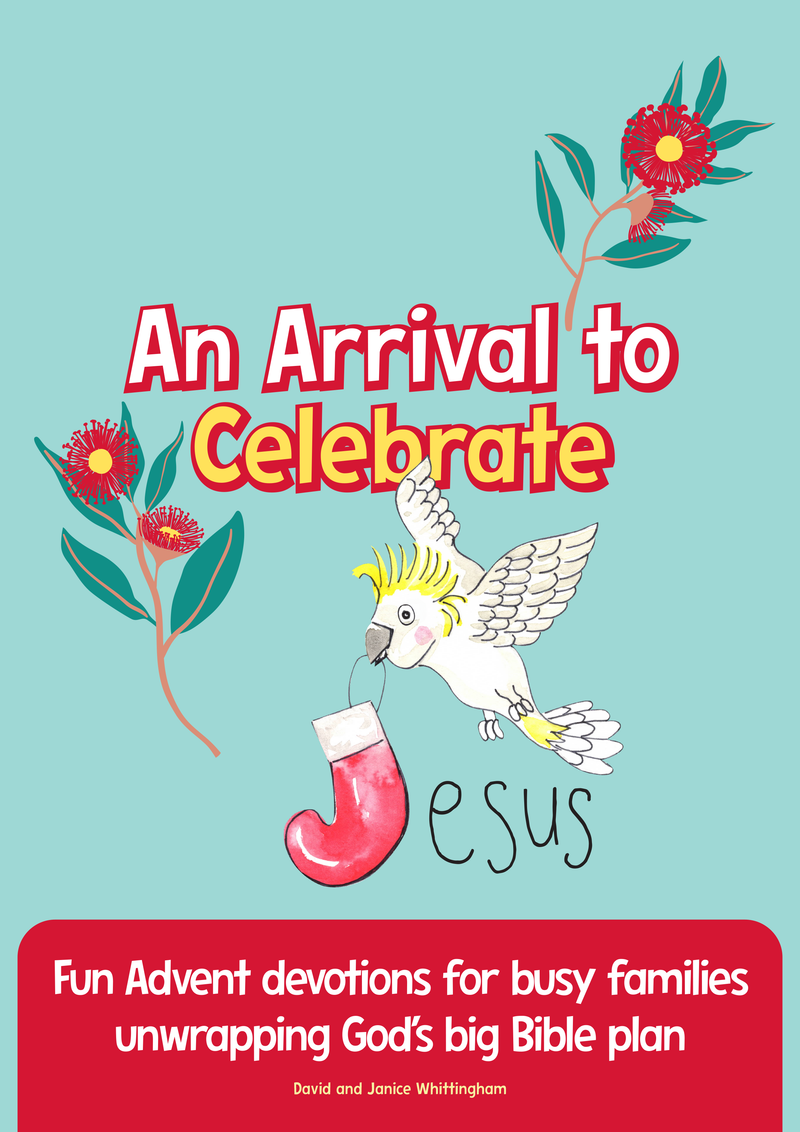
Youthworks Media has also just released a digital Advent resource for families:
An Arrival to Celebrate: Fun Advent devotions for busy families unwrapping God’s big Bible plan

An Arrival to Celebrate

Timeless Parenting is brought to you by Growing Faith, a ministry of Youthworks Media, and Mothers Union Sydney.

Schooling: positive starts and positive partnerships

Most Australian children will spend 13 years of their life attending school. That’s a long time! So as parents it’s important for us to think about how to set our kids up for a positive and meaningful experience of schooling.

That was the focus of our most recent conversation on the Timeless Parenting podcast with our guest, preschool educator and mother-of-five, Kat Ashton Israel.

Many parents agonise over the seemingly all-important question: When should I send my child to school? For children born in the first half of the year, parents have the choice of sending them when they are turning five or turning six. We can become preoccupied by getting this decision ‘right’.

This is indeed an important question to consider, and one that we discuss in this episode. But actually, it isn’t the only question we need to think about. In our conversation we also talked about:

How can we begin preparing our child for starting school?

How can we develop a positive partnership with our child’s school and teacher?

When concerns and conflicts with the school arise, how can we navigate them well?

As Christians, how can we make a positive contribution to our school community?

One question we chose not to discuss was which kind of schooling to choose for your child—public, church or Christian school … or homeschooling. If you would like to think more about that topic, check out Emily Cobb’s chapter of Parenting in God’s Family: ‘Weighing up different types of schooling’.

This conversation brings a balanced Christian perspective to the topic of schooling and will give you plenty of ideas for having positive starts and positive partnerships at school!

Listen, be encouraged and share it with your friends!

You can also find our podcast on SpotifyApple Podcasts and other platforms.

Mothers Union Sydney runs an annual seminar about Christian life and parenting. Listen to talks from previous seminars on Soundcloud.

If you want to get in touch with us to offer some feedback or suggest a topic, you can write to us at: timelessparenting@youthworks.net

Timeless Parenting is brought to you by Growing Faith, a ministry of Youthworks Media, and Mothers Union Sydney.

Page 2 of 15

Powered by WordPress & Theme by Anders Norén