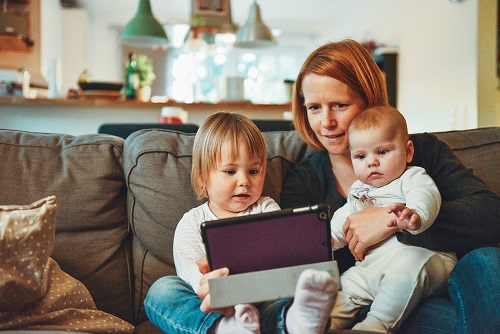
I had an encouraging chat with two of my mum friends about the joys and challenges of motherhood during the COVID-19 pandemic. This was part of the “Everyday Conversations” series from The Gospel Coalition Australia.
Watch the video here.

I had an encouraging chat with two of my mum friends about the joys and challenges of motherhood during the COVID-19 pandemic. This was part of the “Everyday Conversations” series from The Gospel Coalition Australia.
Watch the video here.

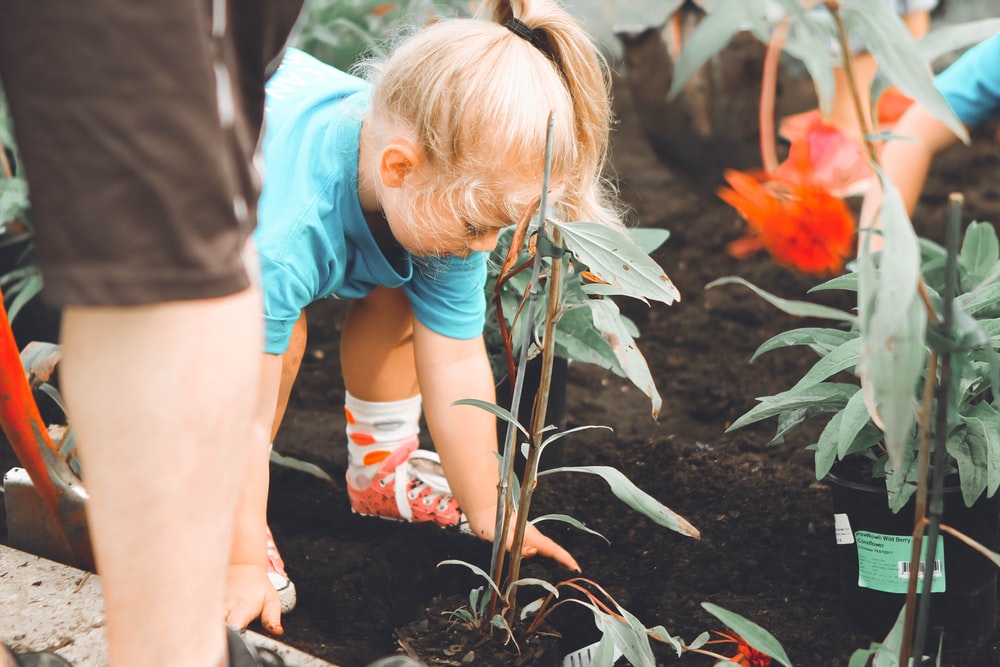
“In these extraordinary days, we have a unique opportunity to strengthen our families by taking up again the God-given responsibilities we have to one another. Parents can reclaim their role as their children’s primary teachers, and children can learn once again to work alongside their parents as their primary apprentices.
Let’s transform our homes from places of mere consumption and recreation into fruitful places of learning and productivity. May our homes be full of shared life, where childcare, education and work intertwine and overlap, and where the next generation can grow up to share in our great human vocation for the good of our world and our neighbours, to the glory of God.”

“Because of the threat of COVID-19, families across the world are bringing their children’s education and their own work back into the home.
It’s tempting to see this situation purely negatively—as a terrible inconvenience to our daily lives. We have become accustomed to our homes, schools and workplaces staying in their separate spheres. But what if we take this opportunity to see things from a different angle? How could this moment in history help us to re-evaluate the way we live, work and raise our children? What could be the benefits to our families of learning and working at home together?
I strongly believe that bringing education and work back into the home can help us to live out our God-given calling as families. This series of articles will begin by focusing on two parts of this calling: parents as teachers and children as apprentices.”

A few months ago I asked God what I should do with my time once our youngest son starts school next year (Read about it here). Inspired by the legacy of my grandmothers’ generation, I wanted to pursue my God-given vocation rather than just a job. I wanted to find work that would honour, rather than compete with my role as a mother—as a “worker” who is not interchangeable, but already entwined in a web of relationships with particular people in a particular place. I collected stories from other mothers who had done this by: working in family businesses, working in their church or their children’s school, working from home, monetising their work in the home or “working” as a volunteer.
One “job” that God called me to do fell into that last category: I agreed to take over the running of a lunchtime Christian group at our older sons’ school while our youngest went to preschool for an extra day.
Recent weeks have thrown a couple of “spanners” into the works, which have prompted me to reflect a little more on the work of mothers. I have been forced to find ways of better integrating work and motherhood so that it’s a case of both/and, not either/or. I have come to appreciate that the work of mothers is best described as “polychronic”—that is, achieving multiple goals at the same time. [1]
Since writing this article, life has thrown all of us another major “spanner” into the works, in the form of a global pandemic. This has forced us to integrate our roles as parents and workers in a different way. I plan to write more about that in a number of future articles.

Recently I had the opportunity to talk with Alastair Roberts, a theologian I have learnt a lot from over the past couple of years.
Listen as we talk about how social changes in the way we live, work and raise our children have impacted mothers and families, and as we suggest some steps we can take to improve things.

Unlike many women, I did not have an identity crisis when I became a mother. That’s probably because I didn’t really have a career to identify with in the first place. I had tallied up seven years of tertiary study and worked a few part-time jobs; but I certainly didn’t experience any grief at having to stop work when our first son was born.
I spent the next ten years of life with my centre of gravity at home. We welcomed a second son and then a third into our family: I was busy caring for babies, toddlers and pre-schoolers on repeat.
But this year, our youngest son will be getting ready to start school; it will be my final year of having children at home during the week. Now I can feel an identity crisis looming. What will I do once our littlest one goes to school?

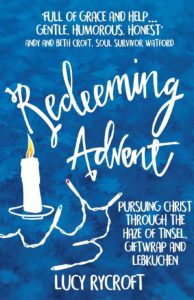
For many of us, the season of Advent—the four weeks leading up to Christmas—is the busiest time of the year. Our calendars fill up with parties and celebrations, concerts and carol-singing. Our to-do lists spill over with shopping and baking, card-writing and present-wrapping.
But for Christians, Advent is also one of the most spiritually significant times of the year. Traditionally, Advent (which means “coming”) is a season of expectation: we remember Israel’s years of waiting for God’s promised Messiah to come; we also remember that we too are in a time of waiting—for God’s Messiah to come again in glory.

Our eldest son turns ten this weekend and it feels like a significant milestone. Motherhood (and fatherhood) teaches us a lot about ourselves and about life: not the kind of abstract knowledge you learn from a textbook, but the kind of wisdom and understanding you can only gain from experience. In fact, I have learnt most of these lessons by doing things the wrong way first!
Apart from experience, the thing that has taught me the most about parenthood has been listening to the wisdom of previous generations through reading the Bible and talking to my grandmothers. Here’s what I have learnt:

I had a great conversation with Jonathan from Crosslife about why so many modern parents feel overwhelmed, and what we can do to help ourselves. We talk about how to deal with issues like busyness, “keeping up with the Joneses” and perfectionism.
Listen to our conversation on the Conversations for Life podcast here (scroll down to conversation 11.).

At some point, every parent looks with pity at their child and thinks, “Poor thing. They get it from me.” Sometimes we’re thinking of some superficial attribute—our knobbly knees or uncontrollable cowlicks. But other times, we’re thinking of something more serious we’ve passed on, like asthma or anxiety.
We can also feel guilty about the things we pass on not by nature, but by nurture. Modern parents live in fear of emotionally “scarring” their children through negligence or ignorance; we constantly seek out expert advice to help us get our parenting just perfect.
Sometimes the impact of our imperfect parenting is obvious: we see our children reflecting our worst habits right back at us. My heart sinks when I see our children snapping and growling at each other, saying “For goodness sake!” or “How many times do I have to tell you?!”
Our children’s imperfections are a constant reminder that we have reproduced according to our kind. In a fallen world, human children inherit the genetic flaws and sinful tendencies of their imperfect human parents.
Page 10 of 15
I'm a mother, wife and Bible teacher from near Sydney, Australia. I write about how the Bible's ancient wisdom makes sense of modern life and parenthood.
Powered by WordPress & Theme by Anders Norén